Select Your Product
- Custom Packaging
Get Help With
Expert GuidanceNeed help to find the perfect packaging? Contact us now for a free consultation with our packaging specialists.
 Call Us (732) 344-8007 Get free quote
Get Help With
Expert Guidance
Need help to find the perfect packaging? Contact us now for a free consultation with our packaging specialists.
Call Us (732) 344-8007 Get free quoteOrder custom boxes of any type along with printing your logo on them. We are a wholesale custom box printing and packaging company.
Order Now
Get your custom packaging boxes for your product packing and shipping in affordable cost.
Get quick answers about custom boxes, from pricing and minimum orders to materials, printing and delivery.
Custom boxes are packaging made to your exact needs. You choose the size, shape and structure. You choose the material and the thickness. You add your own logo, colors and artwork. The box fits your product and not the other way around. This gives better protection and a stronger brand look. Custom boxes are used for retail, shipping, food, gifts and subscriptions.
Most custom boxes cost between $0.50 and $10 per box. Simple printed cartons sit at the low end. Rigid gift boxes sit at the high end. The final price depends on size, board, print and finish. It also depends on how many boxes you order. Large orders cost far less per box. Always ask for a quote at your real quantity.
Several things change the price. Box size and style come first. Bigger boxes use more material. The board type and thickness come next. Print colors and coverage add cost. Finishes like foil and embossing add more. Quantity has the biggest effect. Inserts, windows and special tooling also raise the price. Shipping distance adds to the total.
The minimum depends on the printing method. Digital printing often starts at 25 to 100 boxes. Offset and flexo printing usually start at 250 to 1,000 boxes. Rigid boxes often start at 500 pieces. Minimums exist because of setup and plate costs. Ask each supplier for their exact minimum before you design.
Yes, you can. Digital printing makes short runs possible. Orders of 25 to 100 boxes are common for startups. Seasonal launches and test products also use small runs. The cost per box is higher than bulk. That is the trade-off for low risk. Start small and test your design. Scale up once the product sells.
Most printed boxes take 2 to 4 weeks. The clock starts when you approve the proof. Complex boxes take longer. Foil, embossing and rigid builds can need up to 6 weeks. Ocean freight adds more time. Rush options may exist for an extra fee. Order early before busy seasons. Build in a buffer for delays.
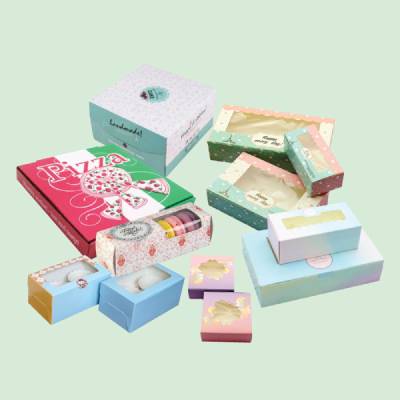
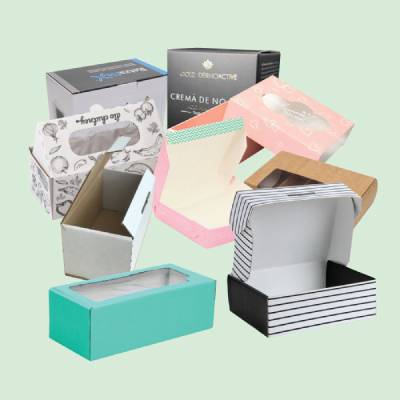
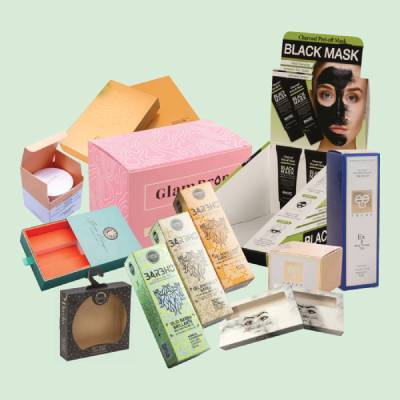
Mailer boxes are very popular for ecommerce. Folding cartons are common for retail products. Rigid boxes suit luxury and gifts. Tuck top and lock bottom boxes are classic retail styles. Sleeve boxes add a branded wrap. Window boxes show the product. Shipping boxes handle heavy items. Food boxes cover cookies, pizza and bakery goods.
The best material depends on your product. Corrugated board is strong and good for shipping. Paperboard and cardstock suit light retail items. Rigid chipboard gives a premium feel. Kraft board gives a natural, eco-friendly look. Consider weight, shipping method and budget. Think about your brand image too. Ask for material samples before you decide.
Corrugated boxes have a wavy layer between two liners. This makes them strong. They are best for shipping. Folding cartons are thin paperboard. They ship flat and cost less. They suit retail products. Rigid boxes use thick wrapped chipboard. They do not fold flat. They feel premium and suit luxury items and gifts.
A corrugated mailer box is the usual choice. It is strong and easy to assemble. It folds flat for storage. It survives parcel handling well. You can print your brand on the outside and inside. Pick a snug size to avoid extra shipping fees. Add inserts for fragile items. Test one sample before you order in bulk.
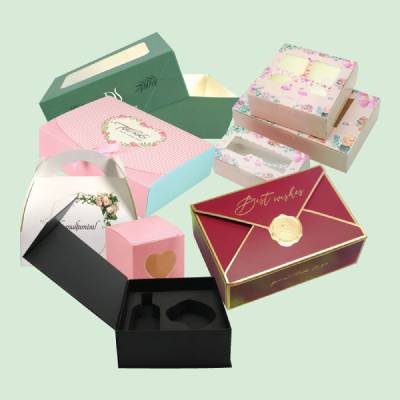
Rigid boxes are the top choice for gifts. They feel solid and luxurious. Magnetic closure and lift-off lid styles look elegant. Collapsible rigid boxes save storage space. Folding gift boxes are a budget option. Add ribbon, tissue or an insert for polish. Choose colors that match the occasion. Premium finishes make the gift feel special.
Yes, you can. Your logo can go on the outside, the inside or both. You can use full-color printing for detail. You can use single-color printing for a simple look. Foil stamping adds shine. Embossing and debossing add texture. Send your logo as a vector file. This keeps it sharp at any size.
For most brands, yes. Recycled and FSC-certified boards cost about the same as standard ones. Many shoppers prefer sustainable packaging. Kraft and corrugated boxes are easy to recycle. Water-based inks reduce environmental impact. Plastic-free coatings help too. Skip extras that block recycling. Clear eco messaging on the box builds trust.
Start with your product's length, width and height. Add room for inserts or cushioning. Keep the fit snug. Too much space lets the product move. Too little space risks damage and crushing. Oversized boxes also raise shipping costs. Order a plain sample first. Test the fit with the real product before you print.
Send print-ready vector files. AI, EPS and press-quality PDF are the best choices. Build the art on the supplier's dieline. Use CMYK or Pantone colors. Convert fonts to outlines. Add a 0.125 inch bleed. Keep images at 300 DPI or higher. Never send low-resolution screenshots. Clean files prevent delays and print errors.
A dieline is a flat template of your box. It shows the cut, fold and glue lines. It uses exact dimensions. You place your artwork on top of it. This makes the print line up on every panel. A wrong dieline causes misaligned logos. It can lead to costly reprints. Always use the dieline your supplier provides.
Yes, and you should. A plain white sample tests the size and structure. A digital proof lets you approve the artwork. A printed sample shows real colors and finishes. Printed samples may cost extra. They are worth it for large orders. Samples catch mistakes early. They save money and stress.
Digital printing uses no plates. Setup is quick and cheap. It is great for short runs and fast turnaround. Offset printing uses metal plates. Setup costs more. Color accuracy is excellent. The price per box drops sharply on large runs. Choose digital for tests and small batches. Choose offset for volume.
You have many finishes to choose from. Matte lamination gives a smooth, calm look. Gloss lamination gives shine. Soft-touch coating feels velvety. Spot UV highlights small areas. Foil stamping adds metallic color. Embossing and debossing add texture. Aqueous coating adds light protection. Each finish changes the cost and the feel.
It depends on your brand and product. Foil and embossing make boxes look premium. They work well for luxury, beauty and gifts. They can raise the perceived value of your product. They also add cost and lead time. Use them on small areas like a logo. This keeps the price under control. Skip them for low-cost items.
Screens use light and print uses ink. Screens mix red, green and blue light. Printers mix cyan, magenta, yellow and black ink. This changes how colors look. Paper type also affects color. Kraft board looks darker than white board. Use CMYK files for accuracy. Use Pantone colors for exact brand shades. Ask for a printed proof.
Yes, they often do. Branded boxes make a product feel valuable. They build brand recognition. Customers enjoy opening a well-designed box. Many share photos and videos online. This brings free marketing. Printed interiors, inserts and thank-you notes add delight. A great first impression can lead to repeat purchases.
Yes, you can. A die-cut window shows the product inside. A clear film patch covers the opening. Windows work well for cookies, candles and cosmetics. They help shoppers trust what they buy. Plastic-free and recyclable window options exist. Keep the window size reasonable. Very large openings can weaken the box.
Yes, you can. Inserts hold products in place. They stop items from rubbing together. They give a neat, premium look. Common materials are paperboard, corrugated, molded pulp and foam. Choose the material that suits your product. Share exact product dimensions. The insert is then cut for a snug fit.
Choose a board strong enough for the weight. Keep the box size snug. Add inserts or void fill to stop movement. Use corrugated for parcel shipping. Seal the box well. Consider a double-wall board for heavy items. Run a drop test with a sample. Fix any weak points before you place a large order.
Flute is the wavy layer inside corrugated board. Its size affects strength and thickness. E flute is thin and good for retail and mailers. B flute is a bit thicker and prints well. C flute is common for shipping. Double-wall board combines two layers for heavy loads. Pick the flute that matches your product weight.
They can be. Use food-grade paperboard. Choose safe, food-compliant inks. Add a grease-resistant liner or barrier coating when needed. This protects the box and the food. Bakery, cookie and pizza boxes are made this way. Tell your supplier the food type. They can recommend the right materials and coatings.
Order more boxes at once. A larger run lowers the unit price. Choose a standard box style. Limit your print colors. Pick simple finishes over foil or embossing. Use recycled kraft or corrugated board. Combine sizes into one run when possible. Order early to avoid rush fees. Compare quotes at the same specs.
Yes, most suppliers offer help. They provide dieline templates. Many offer basic layout support. Some have in-house designers for a fee. Share your logo, colors and product details. Explain your brand style. Ask for a digital proof or 3D mockup. Approve it before production starts. This avoids costly mistakes.
First, choose the box style, size, material and quantity. Second, request a quote and a dieline. Third, upload your artwork. Fourth, approve the digital proof. Fifth, review a sample if you need one. Sixth, confirm payment. Seventh, wait for production. Last, receive and inspect your boxes.
Often, yes. Many suppliers allow multiple designs in one run. Each size or design may have its own minimum. Some offer the same box with different artwork. This is called a multi-SKU order. It suits brands with several products. Ask the supplier how they count the minimum. A combined order can save setup costs.
Yes, they are ideal. A branded mailer sets the tone for every delivery. Choose a strong, flat-folding style. Print the inside for a surprise. Add inserts to hold each item. Keep one standard size for easy reordering. Order enough for several months. This keeps the look consistent and the cost low.
Yes, you can. Inside printing adds a pleasant surprise. You can print patterns, messages or instructions. Full-color interiors cost more than plain ones. Single-color interiors are a budget option. Printed interiors boost the unboxing moment. Plan the artwork on the dieline. Make sure it matches the outside design.
Keep boxes in a cool, dry place. Humidity can weaken the board. Store them flat if they fold flat. Keep them off the floor on pallets or shelves. Avoid direct sunlight. Sun can fade printed colors. Do not stack too high. Heavy stacks can crush the bottom boxes.
Most boxes ship flat to save space. Small orders go by parcel carrier. Larger orders go on pallets by freight. Overseas orders may come by sea or air. Sea freight is cheaper but slower. Air freight is faster but costs more. Confirm the delivery address and a contact number. Ask for tracking details once the order ships.
Count the boxes first. Compare them with your approved proof. Check the size and fit with your product. Look at the print colors. Inspect the folds and glue. Test assembly on a few boxes. Look for dents or damage. Report any problem quickly. Keep photos and the order details for reference.